The principle
Fragrance is not odor removal
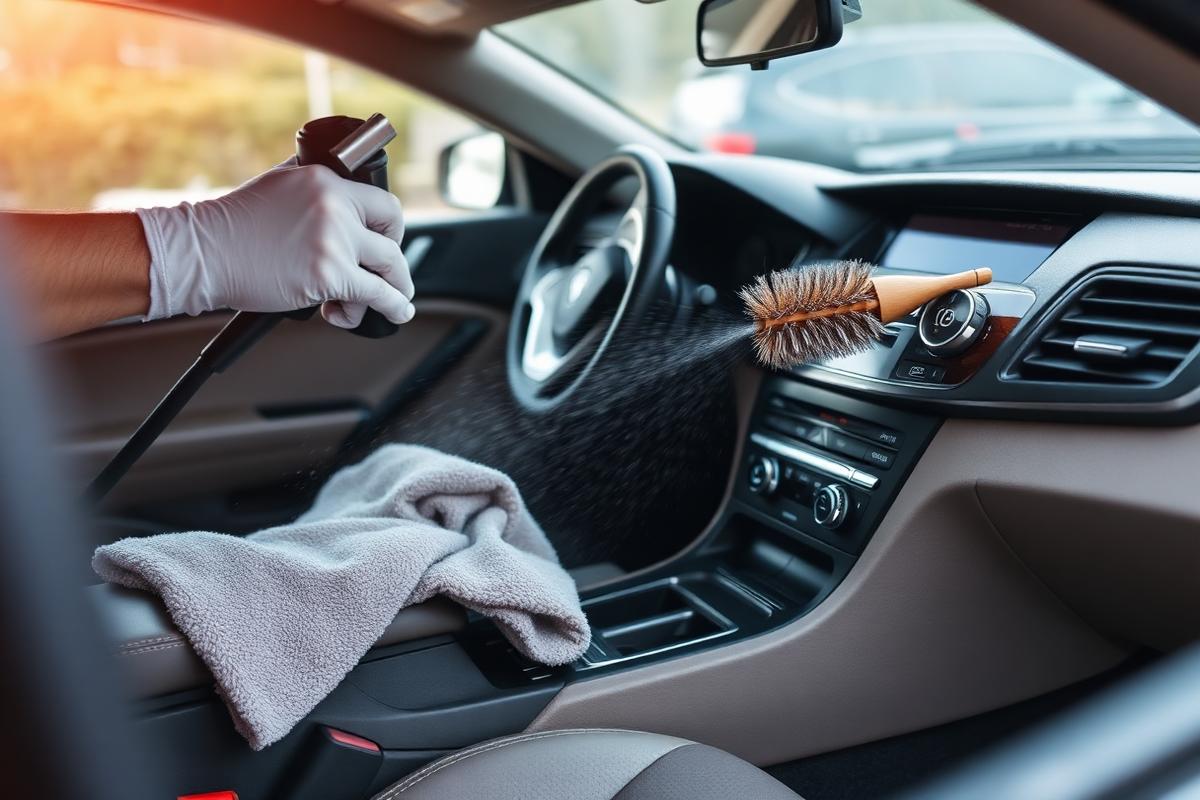
Hanging an air freshener over a smell does two things: it adds a second odor and it hides the first for a few days. It removes nothing. Every persistent vehicle odor has a physical origin — nicotine tar condensed on the glass and headliner, milk soaked into carpet padding, dander through the ventilation, mold on an evaporator core, food under a seat rail. Until that material is gone, the smell returns whenever the cabin heats up, which in a Fort Worth summer is every afternoon.
So the work starts as investigation. Where is it strongest? Does it intensify with the air conditioning running, which points at the HVAC system, or when the vehicle sits closed in the sun, which points at the soft surfaces? Is there a history of a leaking sunroof drain or a wet floor? The answer determines whether the fix is extraction, HVAC treatment, or telling you honestly that the cause is a mechanical repair we cannot solve with cleaning.
Common sources
What usually causes it
Spilled milk or protein
The classic. It soaks through carpet into padding and turns severe after a few hot days. Extraction of the affected area, and sometimes lifting the carpet, is the only real fix.
Cigarette and cigar smoke
Tar condenses on every surface including glass and headliner. Removal means cleaning all of it, replacing the cabin filter and treating the vents. Long-term saturation may only improve.
Pet odor
Hair, dander and skin oils in fabric. Usually responds well once the hair is removed and the surfaces extracted. Urine that reached the foam is the difficult case.
Mildew and damp
A leaking sunroof drain, a bad door seal or wet floor mats left in the heat. The moisture source must be found first, or the smell comes back within weeks.
HVAC musty smell
Moisture and biological growth on the evaporator core, most noticeable in the first seconds of turning on the AC. Treated through the system and the cabin filter.
Food and drink
Fast food grease in carpet, a forgotten drink in a cup holder, something under a seat. Usually straightforward once located, and locating it is most of the job.
Method
How the work proceeds
- Locate the source before treating anything, including under seats and in the cargo well
- Remove the physical residue by extraction, cleaning or removal of the offending material
- Deep clean all soft surfaces that have absorbed the odor over time
- Clean hard surfaces, glass and headliner where residue condenses, especially with smoke
- Address the ventilation system and recommend a cabin air filter replacement
- Ventilate and air the cabin thoroughly rather than sealing a fragrance over it
- Re-check after drying, since some odors only reveal themselves once the interior warms
Expectations
What is realistically achievable
Food spills, ordinary pet odor, gym-bag smells and general staleness are usually resolved completely. Mildew resolves if the water intrusion is fixed, and returns if it is not — a detail cannot repair a sunroof drain. Heavy long-term smoke saturation in a vehicle smoked in daily for years improves significantly but occasionally leaves a trace that appears on hot days.
The one we are most careful about is animal urine that has soaked into seat foam or carpet padding. Cleaning the surface helps, but the material holding the odor is inside the cushion. Sometimes the honest answer is that removing or replacing the affected padding is the only complete solution, and we would rather say so than take payment for a result that will not last.
FAQ
Common questions
Do you use ozone treatment?
Odor work here focuses on removing the source, because that is what produces lasting results. Any additional treatment is only worth doing after the physical residue is gone; applied to a dirty interior it buys a few days at best. We will discuss what makes sense for your specific situation rather than applying a standard add-on.
How long until the smell is fully gone?
Most of the improvement is immediate. Because deep cleaning introduces moisture, the interior needs to dry fully before the final result is apparent, usually within a day. If a lingering trace remains after everything is dry, that tells us the source was deeper than the surfaces and we will discuss next steps.
Can you remove smoke smell completely?
It depends on how long and how heavily the vehicle was smoked in. A car with occasional smoking usually comes out clean. A vehicle smoked in daily for several years has tar in the headliner, the foam and the ventilation, and the realistic outcome is a large improvement rather than a perfect reset. We assess the vehicle before quoting.
The smell comes from the vents when I start the AC. Can you fix that?
That pattern points to the evaporator core and the cabin air filter, not the upholstery. Treating the ventilation system and replacing the filter resolves most cases. If the drain is blocked and water is sitting where it should not, that is a mechanical repair and we will tell you what to have checked.
Will you just use a strong fragrance if it does not work?
No. Masking a smell is how a vehicle ends up smelling like cherry and mildew at the same time. If a source cannot be fully removed we tell you what remains, what caused it and what would actually resolve it, even when that is work we do not perform.
Ready to book mobile detailing?
Tell us the vehicle, its current condition and where it will be parked, and we can put together a quote and a time that works.