What it is
Removing defects rather than filling them
Washing cleans the surface. Correction changes it. The difference shows up the moment the car sits in direct sun.
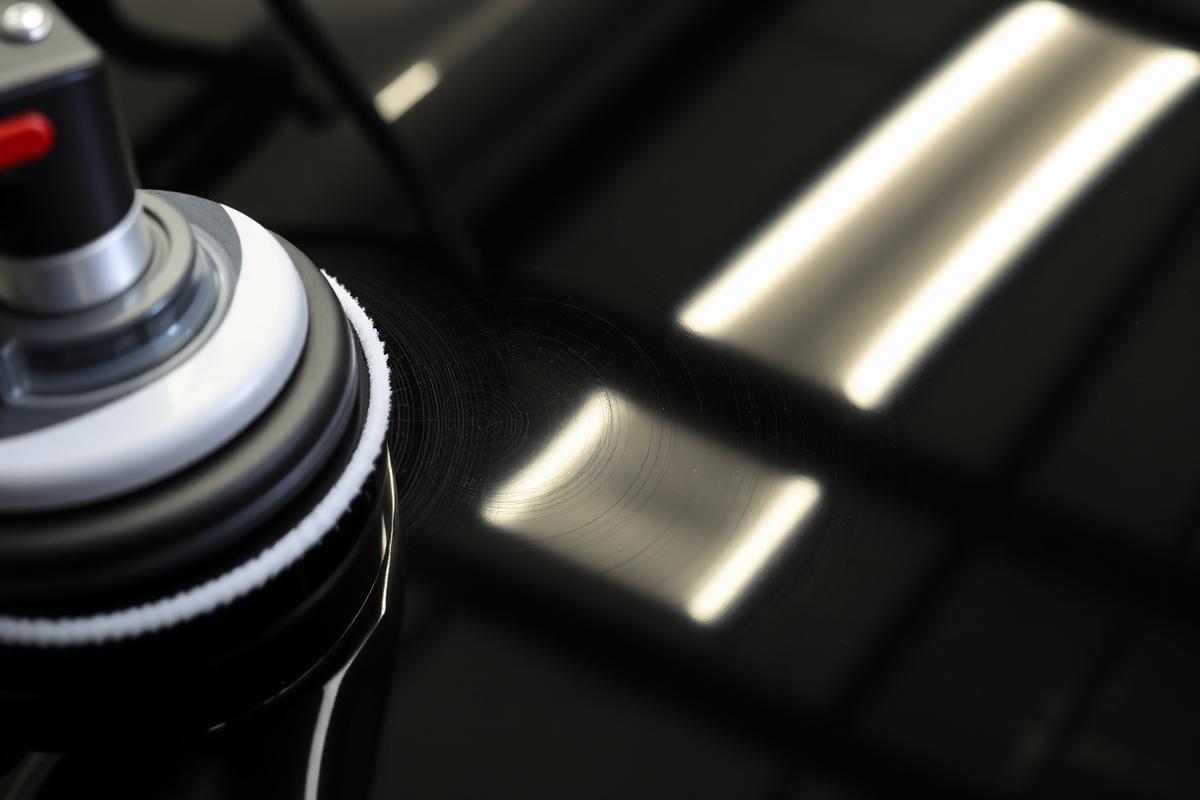
Most of what makes paint look tired is not dirt. It is thousands of fine scratches in the clear coat that scatter light instead of reflecting it cleanly. Under a garage light they are invisible; in Texas sunlight they turn a black hood into a spiderweb and take the depth out of every color. They come from ordinary life — automatic wash brushes, a dropped wash mitt, wiping dust off a dry panel, a towel that picked up grit.
Correction levels that surface with a machine polisher, a pad and an abrasive polish, removing a very small amount of clear coat so what remains is flat and optically clear again. Because the defect is physically gone rather than filled with a temporary glaze, the result survives washing — which is the whole point.
It is also the reason correction almost always precedes ceramic coating. A coating locks in the surface it is applied over; correcting first is what makes the difference between a shiny car and a genuinely deep finish.
Defects correction addresses
- Swirl marks from washing and drying
- Wash marring and towel scratches
- Light oxidation and chalky, faded clear coat
- Haze that dulls reflections and flattens color
- Buffer trails from previous poor polishing work
- Light water-spot etching that has not gone too deep
- Loss of gloss on hoods, roofs and truck bed rails
Limits
Rock chips, deep scratches that catch a fingernail, damage through to primer, and failing or peeling clear coat are outside what polishing can fix. Those can sometimes be improved in appearance, but the honest answer is given before work begins rather than discovered afterward.
Levels
One-step versus multi-stage correction
More aggressive is not automatically better. The right level is the least aggressive one that reaches your goal for the vehicle.
One-step enhancement
A single pad-and-polish combination that removes a meaningful portion of lighter defects and delivers a large jump in gloss. It is the sensible choice for daily drivers, leased vehicles and anyone who wants a clear visual improvement without the hours a full correction demands. Deeper defects will remain, and that trade-off is explained up front.
Multi-stage correction
A cutting stage followed by refining passes, working panel by panel under inspection lighting. This is what gets paint close to defect-free clarity, and it is the right preparation when a long-term coating is going on top. It takes far longer and costs accordingly, which is why it is recommended when the vehicle and the owner's goals justify it — not by default.
Process
How correction is approached
- 01
Wash & decontaminate
Nothing gets polished until the surface is clean and smooth — any bonded grit left behind would be dragged across the paint by the pad.
- 02
Inspect & test
Paint is assessed under inspection lighting, thickness considered, and a test section worked to find the least aggressive effective combination.
- 03
Polish in stages
Panel by panel with controlled passes, refining afterward so the finish is clear rather than hazed by the cutting stage.
- 04
Wipe down & protect
A panel wipe reveals the true result without polishing oils masking it, then protection goes on to keep the corrected surface that way.
Local context
Why Fort Worth paint ends up needing it
Sun exposure
Sustained UV on unprotected clear coat produces oxidation and fading, worst on the horizontal panels that take the most direct sunlight — hoods, roofs and the bed rails of trucks that never see a garage.
Water and minerals
Sprinkler overspray and storm water dry fast in the heat, leaving deposits behind. Repeated heat cycles can turn those from something that wipes off into etching that only polishing will address.
Wash habits
A commuting city produces dirty cars, and dirty cars get washed quickly — often by an automatic brush tunnel. That convenience is the single largest source of swirl marks on the vehicles we see.
FAQ
Paint correction questions
What is paint correction?
Machine polishing that removes a microscopic amount of clear coat to level the surface, taking out the defects that sit inside it — swirl marks, wash marring, haze and light oxidation. Unlike a glaze or filler, it changes the paint itself rather than temporarily hiding the damage until the next wash.
Can every scratch be removed?
No, and anyone promising that is guessing. If a defect can be felt with a fingernail, it has likely gone through the clear coat and polishing will not remove it — it can sometimes be improved in appearance, but not erased. Clear coat is finite, and removing too much to chase one deep scratch is worse for the vehicle than leaving it.
What is the difference between one-step and multi-stage correction?
A one-step uses a single combination of pad and polish to remove a meaningful share of lighter defects while improving gloss — good value for daily drivers. Multi-stage work uses a cutting pass followed by refining passes for a much higher level of defect removal and clarity, and takes considerably longer. Which one makes sense depends on the paint, the goal and the budget.
Should paint correction be done before ceramic coating?
Yes, in almost every case. A coating seals the surface as it finds it, so any swirls or haze left underneath will be locked in for the life of the coating. Correcting first is what makes a coated car look deep instead of merely glossy.
How do I know if my paint needs correction?
Look at the hood in direct sunlight or under a bright light at night. Fine circular scratches radiating from a point, a hazy veil that dulls reflections, or a chalky look on older single-stage paint are all correctable defects. If the paint looks clean but feels rough, that is contamination and decontamination comes first.
How long does correction last?
The correction itself is permanent — removed clear coat does not come back and neither do the defects that were in it. What is not permanent is the state of the surface going forward: wash the car with a dirty mitt or run it through a brush tunnel and new swirls start immediately. That is why correction is usually paired with protection and better wash habits.
Is correction safe on my vehicle's paint?
Done properly, yes. Paint thickness is assessed, an inconspicuous test section is worked first to find the least aggressive combination that produces the required result, and the process stays conservative. The goal is the best finish that can be achieved without removing more clear coat than necessary.
Related services
Before and after correction
Get your paint assessed
Send a few photos in sunlight with your quote request, or call (682) 900-2910. We'll tell you what level of correction the paint realistically needs — including when it doesn't need any.