What it is
Wash safely, decontaminate properly, protect last
Every scratch a car collects during washing is avoidable. Most swirl marks come from the wash itself — dirty mitts, single buckets, automatic tunnel brushes — which is why technique matters as much as chemistry.
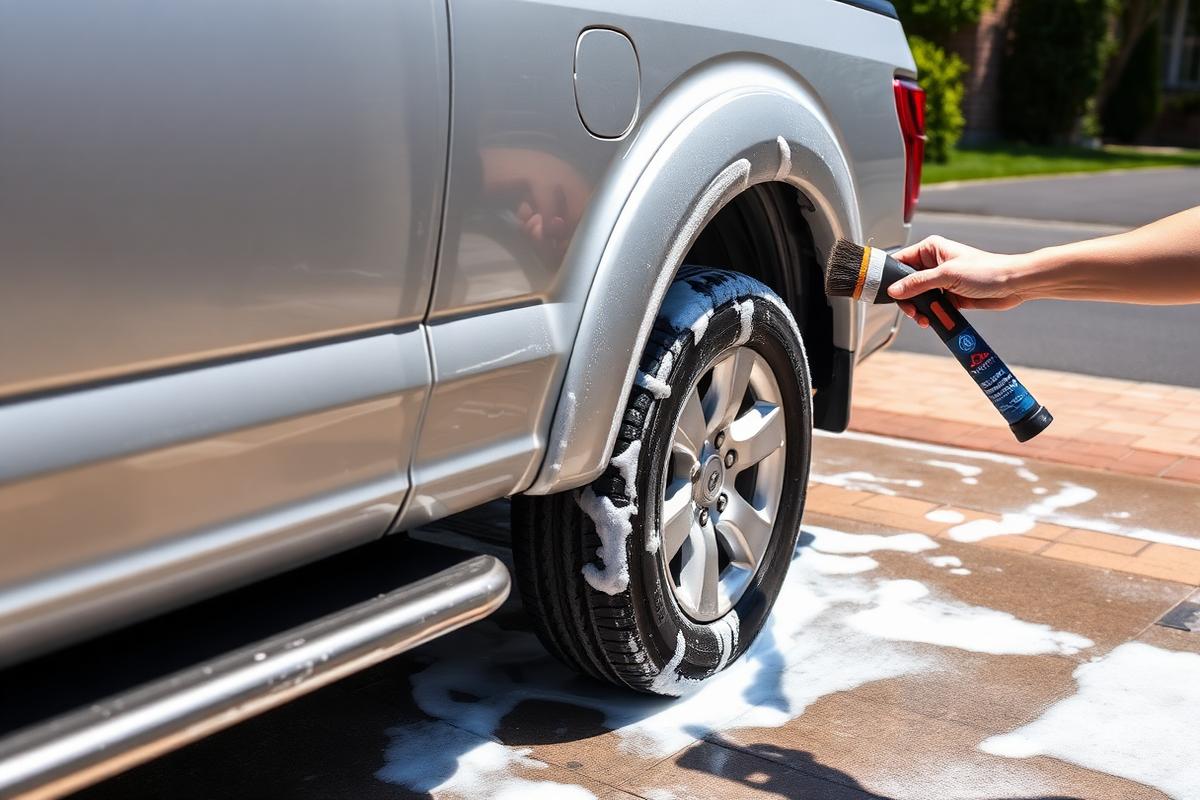
The exterior process starts before anything touches the paint. Wheels and lower panels — the dirtiest areas — are handled first so their grit never travels up onto body panels. A pre-soak lifts the loose layer off, and only then does a clean wash medium make contact, working top-down with fresh solution and grit-separating rinse.
After the wash, the paint is still not clean. Brake dust bonds iron particles into the clear coat, sprinkler overspray leaves mineral deposits, and highway miles add tar and road film. A chemical iron treatment dissolves the metallic contamination and a clay treatment shears off what is left, so the surface goes from rough to glass smooth. Only after that is protection worth applying — a sealant or wax that has something clean to bond to.
What an exterior detail will not do is remove defects that live inside the clear coat. Swirl marks, etching and oxidation are corrected mechanically with a polisher; that is paint correction, and it is a separate step with a separate purpose.
What's included
- Wheels, barrels and tires cleaned first
- Wheel wells and lower rockers addressed
- Pre-soak and safe contact hand wash, top-down
- Iron and fallout decontamination
- Clay treatment for bonded contamination
- Tar and road-film removal where present
- Bug and grille cleaning on leading edges
- Door jambs and shuts wiped down
- Exterior glass cleaned inside the frame line
- Trim and tires dressed to a natural finish
- Sealant or wax protection applied to clean paint
- Hand dry with clean drying media to avoid marring
North Texas paint
What Fort Worth paint is actually up against
Sunlight is the biggest factor. Long summers with high UV load slowly oxidize unprotected clear coat, and the effect is worst on horizontal panels — the hood, the roof, the bed rails of a truck that lives outdoors. Red and black finishes show it earliest, but every color is losing gloss on the same timeline.
Water is the second. Between irrigation overspray on residential streets and a summer storm followed immediately by hot sun, mineral-laden droplets dry on panels constantly. Left alone through enough heat cycles, a spot stops being a deposit and becomes an etch in the clear coat.
Then there is traffic. Highway miles across the Metroplex leave an oily film that collects dust, and brake dust from stop-and-go traffic embeds iron into the paint and wheels alike. That is the grit you feel on a "clean" car — and the reason decontamination is not an upsell but the actual work.
None of this is dramatic on any given week. It is cumulative, which is exactly why a vehicle that gets decontaminated and protected on a sensible schedule looks years younger than one that never has.
Process
How the exterior work is sequenced
- 01
Wheels first
Wheels, tires and wells are cleaned before anything else so their contamination never reaches the paint.
- 02
Safe wash
Pre-soak, then a top-down contact wash with clean media and grit separation, followed by a careful hand dry.
- 03
Decontaminate
Iron treatment and clay work remove bonded particles until the surface is smooth to the touch.
- 04
Protect
Sealant or wax on the paint, dressing on trim and tires, glass finished clear, then a walkthrough.
Good fit for
When exterior detailing makes sense
- Vehicles parked outdoors full time
- Paint that feels rough even after washing
- Visible water spotting from sprinklers or storms
- Trucks and SUVs carrying heavy road film
- Before selling, trading or photographing a vehicle
- As the prep stage before polishing or coating
- Seasonal reset after a hard summer
- New vehicles you want protected from the start
FAQ
Exterior detailing questions
How is exterior detailing different from a car wash?
A wash removes loose dirt. An exterior detail removes what is bonded to the paint — iron fallout from brake dust, mineral deposits from sprinklers and hard water, tar and overspray — and then protects the surface underneath. When you run your hand over clean paint and it still feels gritty, that is contamination a wash cannot touch.
What is decontamination and does my vehicle need it?
Decontamination is a chemical and mechanical step that dissolves embedded iron particles and lifts bonded debris the wash left behind. Most vehicles that have spent a year or more outdoors here benefit from it, and it is mandatory before any polishing or coating work — protection applied over contamination just seals the problem in.
Can you remove hard water spots?
Often, yes. Fresh mineral deposits usually come off with a dedicated treatment. Spots that have sat baking in the sun long enough to etch into the clear coat are a paint defect rather than a deposit, and removing those requires polishing — which is paint correction work rather than washing.
Do you clean wheels, wheel wells and tires?
Yes. Wheels are cleaned face and barrel where accessible, wheel wells are addressed, and tires are cleaned before any dressing is applied, so the finish is on clean rubber rather than over old browning.
What protection goes on at the end?
A sealant or wax is applied as part of a standard exterior detail, which typically gives you months of protection depending on exposure and how the vehicle is washed. If you want durability measured in years instead, that is a ceramic coating and it needs correction and prep first.
Will you wash a vehicle in direct sun?
Work is managed around conditions — shade, timing and technique all matter on a hot Fort Worth afternoon, since panels that are too hot cause products to flash before they can be worked properly. If a shaded spot is available at your location, mention it when booking.
Related services
Where to go from here
Book exterior detailing in Fort Worth
Describe the vehicle and how it is stored — garaged or outdoors — and we can recommend the right level of wash, decontamination and protection.