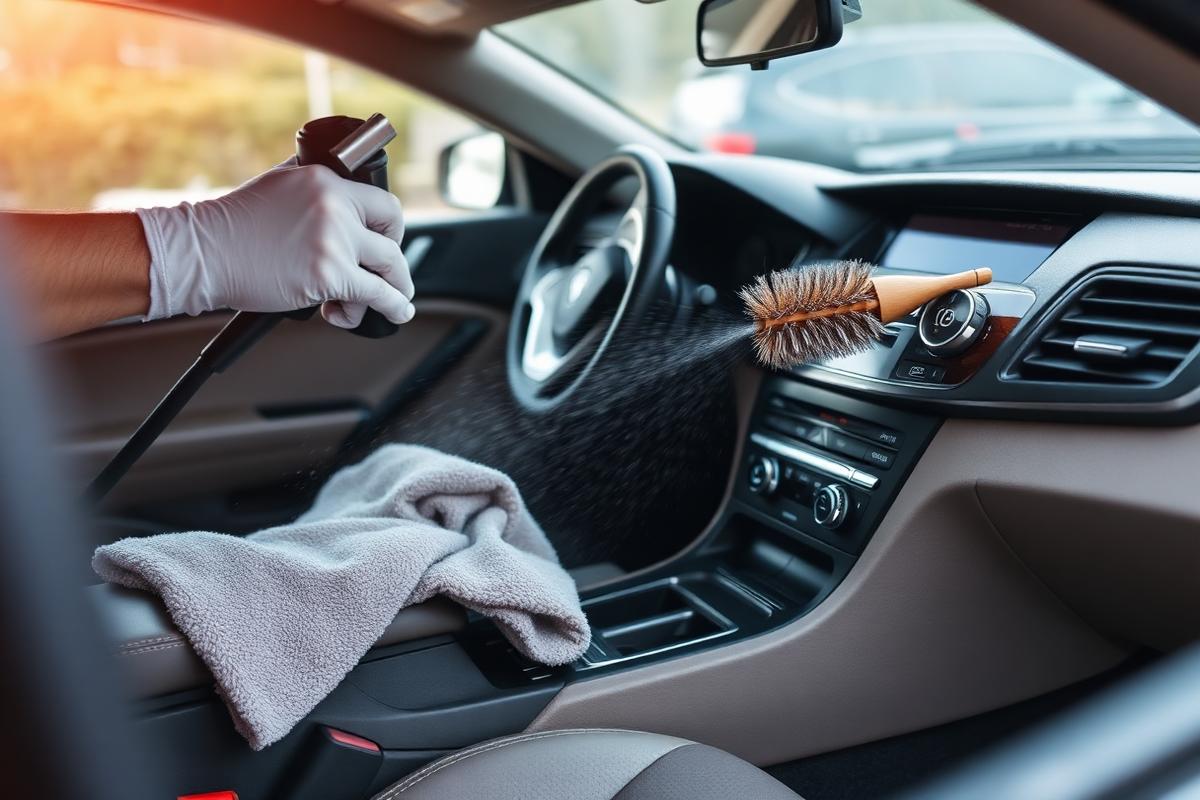
The problem with fabric
Cloth absorbs everything and shows almost none of it
Automotive cloth is usually a woven or knit face bonded to a thin foam backing. That construction is comfortable and durable, and it is also a sponge. Sweat from a Texas commute, spilled drinks, sunscreen, food, dust and the residue of every previous cleaning attempt all get absorbed into the fabric and the foam behind it. The color darkens uniformly, so the change is invisible until part of the seat is cleaned and the difference becomes obvious.
Surface cleaning makes this worse over time. Spraying a cleaner and wiping it drives dissolved soil deeper and leaves detergent behind in the fibers, and residual detergent is sticky — it grabs new dirt faster than clean fabric does. That is the mechanism behind seats that look worse a month after they were cleaned. Extraction avoids it by rinsing the cleaner back out along with the soil it lifted.
Method
How fabric seats are cleaned on location
- Thorough dry vacuuming with agitation so loose soil leaves before liquid is introduced
- Pre-treatment matched to the soil: body oils, food, or general traffic grime
- Dwell time so the chemistry can work instead of being scrubbed in
- Brush agitation across the weave, including bolsters and seat backs
- Hot water extraction to rinse and recover soil and moisture together
- Multiple passes on heavily loaded areas rather than one aggressive one
- Drying passes and airflow to shorten the time before the vehicle is usable
Results
What to expect from the finished seats
Most cloth interiors come back several shades lighter than the owner expected, which is a fair indication of how gradually the soil accumulated. Traffic wear on the driver's bolster improves noticeably. General odor drops sharply because the source of it is being removed rather than covered.
There are limits worth stating. Fabric that has been physically worn thin will be clean but still worn. Some dyes — particularly from denim on light grey cloth — bond into the fibers and only lighten. Long-standing pet urine reaching the foam requires treatment of the foam itself, and even then it is a partial-success job more often than a complete one. We assess before starting and describe what a realistic finish looks like for your specific seats.
Keeping it clean
Practical habits between appointments
Blot, never rub
Press a dry towel straight down onto a fresh spill. Rubbing spreads the liquid across a wider area and works it into the foam backing.
Skip the household cleaner
Most kitchen and bathroom sprays leave residue in automotive fabric that attracts dirt and can lighten the dye. Water and a clean towel is safer than the wrong product.
Vacuum with a brush head
A brush attachment loosens grit from the weave that straight suction leaves behind, and it takes almost no extra time.
Use a sunshade
Cutting cabin heat slows the rate at which spills set permanently into fabric and keeps the whole interior from baking.
FAQ
Common questions
How wet will the seats be afterward?
Damp to the touch, not soaked. Extraction recovers most of the water as it goes and drying passes take out more. In typical conditions the seats are comfortable to sit on within a few hours. Booking in the morning gives them the rest of the day to finish drying with the windows cracked.
Can you get sweat and body odor out of cloth?
Usually yes, because odor from body oils lives in the fibers themselves and extraction removes the source. Cases involving long-term smoke saturation or pet urine in the foam are harder and may only improve. We would rather set that expectation before starting than hand back a seat that still smells.
Will cleaning damage the fabric or fade the color?
The chemistry is matched to automotive fabric and tested in an inconspicuous spot first. Fading is a risk with aggressive household products, not with appropriate cleaners. Where fabric is already weak from wear or sun damage, the process is adjusted rather than pushed, and we will point out anything fragile before we start.
How long does cloth seat cleaning take?
A five-seat sedan in average condition is typically a couple of hours. A three-row SUV with heavy soiling takes considerably longer because there is simply more fabric and each pass has to be done properly. You will get a realistic window when the appointment is booked.
Do you clean the headliner too?
The headliner is handled carefully and separately, because it is thin fabric glued to a backing board and too much moisture causes it to sag permanently. It is cleaned with a light, controlled method rather than extraction, and heavily stained headliners are one of the few areas where honest expectations matter most.
Ready to book mobile detailing?
Tell us the vehicle, its current condition and where it will be parked, and we can put together a quote and a time that works.