How automotive leather works
You are cleaning a coating, not a hide
The leather in nearly every vehicle built in the last three decades is pigmented and topcoated. A clear, flexible urethane layer carries the color and the grain texture and does the actual work of resisting dirt and wear. The hide underneath provides strength and feel. When leather looks worn out, what has usually failed is that topcoat — abraded through on the driver's bolster, or dried and micro-cracked from UV — rather than the leather itself.
This matters for cleaning. Harsh degreasers and all-purpose cleaners at strong dilution attack that coating. So do the silicone-heavy dressings that leave a shine: they build up, attract dust, and can make the surface slick enough to be a real annoyance on a spirited exit ramp. The correct approach is a mild, appropriate cleaner, gentle mechanical agitation to lift soil out of the grain, a clean removal, then a conditioner that leaves a matte, factory-correct finish.
Process
The order of operations
- 01
Assess and test
Identify pigmented, aniline or coated synthetic leather, check for existing cracking or wear-through, and test in a hidden area before working on visible panels.
- 02
Clean the grain
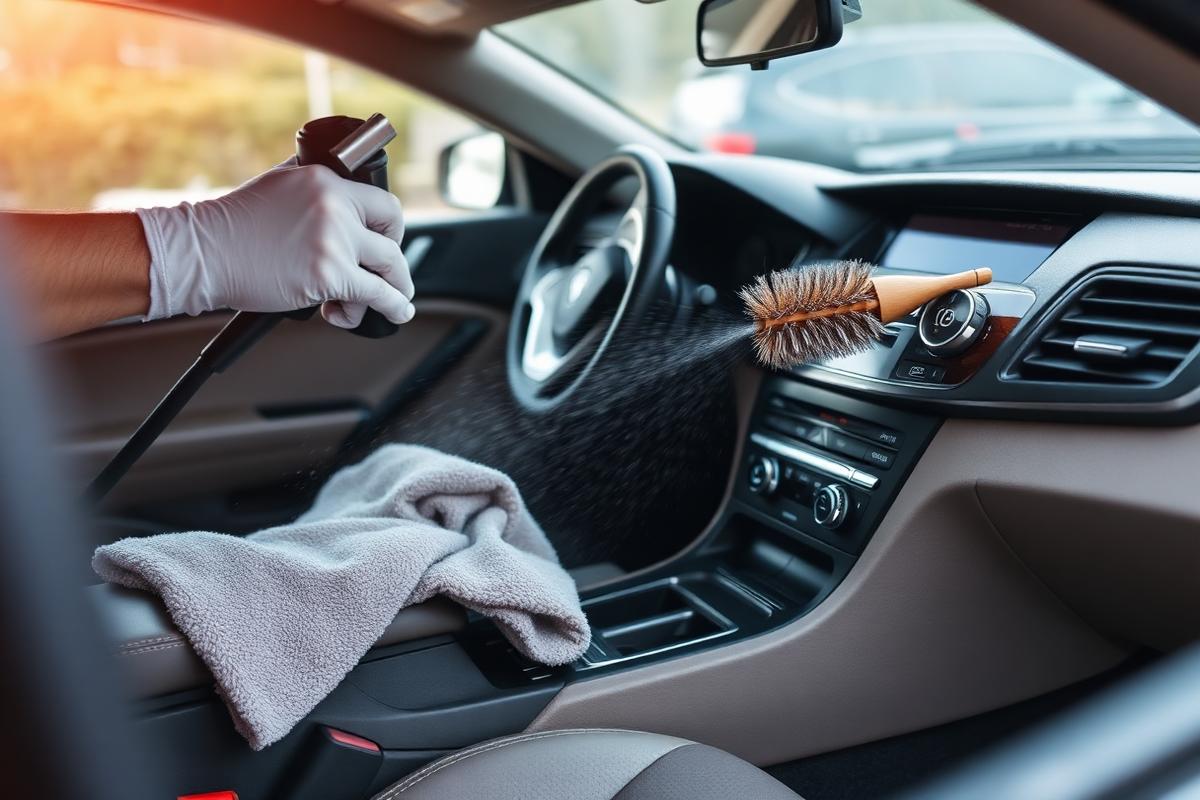
Cleaner is applied to an applicator rather than sprayed at the seat, then worked over the grain and into the perforations with a soft brush so soil lifts out of the texture.
- 03
Remove and inspect
Lifted soil is towelled off before it can settle back in. Seams, piping and stitch lines get individual attention since that is where dirt visibly collects.
- 04
Condition and protect
A conditioner is applied thin and even, allowed to absorb, then buffed to a natural low sheen — no greasy residue, no glare on the windshield.
Texas conditions
Why leather ages faster here
A dark interior parked in an uncovered Fort Worth lot in July can exceed 140 degrees, and the surface temperature of a black leather seat in direct sun through the side glass is higher still. Heat and UV together drive off the plasticizers that keep the topcoat flexible. The coating gets brittle, then micro-cracks appear, and once the surface is fractured, body oils and dirt get into the fissures where cleaning cannot reach them.
That progression is slow and largely preventable. Regular cleaning removes the oils before they concentrate, conditioning maintains flexibility, and shade or a sunshade cuts the heat load that drives the whole process. What cleaning cannot do is reverse cracks that already exist — that is upholstery repair or panel replacement, and we would rather tell you that plainly than sell you a service that will not fix it.
Included
What a leather appointment covers
- All leather seating surfaces, bolsters, backs and headrests
- Perforated sections cleaned with controlled moisture
- Seams, piping and stitching brushed rather than wiped over
- Leather-wrapped steering wheel, shifter and armrests, which hold the most body oil
- Door inserts and any leather trim on the dash or console
- Conditioning on all treated leather, buffed to a matte finish
- An honest report on wear-through, cracking or dye loss we find
FAQ
Common questions
Will conditioning fix cracked leather?
No, and any service that claims it will is overselling. Conditioning keeps intact leather flexible and slows further damage. Cracks are physical failures in the topcoat and hide, and repairing them means filling and re-coating the panel — an upholstery trade job. Conditioning after cracking still helps prevent it spreading.
How often should leather be cleaned in this climate?
A light clean every two months and conditioning three or so times a year suits most Fort Worth vehicles, more if the car lives outside and gets daily sun through the side windows. Vehicles kept in a garage can go longer. The driver's seat and steering wheel always need attention first, because that is where skin oil concentrates.
Can you clean light-colored leather with jean dye transfer?
Often, yes. Fresh indigo transfer on cream or grey leather usually responds to a dedicated cleaner and patient agitation. Transfer that has been sitting for months can migrate into the coating and only lighten. We will test a small area first so you know the likely outcome before committing to the whole seat.
Do you use a shiny dressing on leather?
No. Glossy leather is not how any manufacturer delivers the vehicle, and the products that produce it tend to be silicone-heavy, slippery and dust-attracting. The goal is clean leather with a natural matte finish that looks like the interior did new.
Is leather care included in an interior detail?
Yes. A full interior detail includes cleaning and conditioning the leather along with everything else in the cabin. Booking leather care by itself makes sense when the rest of the interior is already in good shape and the seats are the one thing that has been neglected.
Ready to book mobile detailing?
Tell us the vehicle, its current condition and where it will be parked, and we can put together a quote and a time that works.