Three stages
Not all water spots are the same problem
Stage one is a surface deposit: dried mineral sitting on top of the clear coat. It looks like a white ring and comes off with an acidic mineral remover and very little effort. Stage two is a bonded deposit that has begun to interact with the surface and needs chemical treatment plus light mechanical work. Stage three is etching — the mineral has eaten a shallow crater into the clear coat, and no cleaner will fix it because the paint itself is now deformed.
Which stage you have depends mostly on heat and time. Sprinkler water landing on a cool car in the morning and washed off that day leaves nothing. The same water landing on a hood at midday in July flash-evaporates and concentrates the minerals, and by the following week it is bonded. Anything left through several summer weeks is likely into the third stage, which means polishing rather than cleaning.
Local causes
Where the spots come from in Fort Worth
- Residential sprinkler overspray onto vehicles parked at the curb or in driveways
- Well water and untreated irrigation, which carries a heavier mineral load
- Washing in direct sun so panels dry before they can be dried by hand
- Rain following a dust event, which lands loaded with minerals and grit
- Air conditioning condensate dripping from a parking garage deck above
- Pressure washing a hot vehicle mid-afternoon and letting it air dry
- Automatic car wash spot-free rinses that are anything but, when the system is due service
Treatment
How the work escalates only as far as needed
- 01
Assess the depth
Deposits are inspected under good light and by touch to distinguish surface mineral from actual etching before anything is applied.
- 02
Chemical removal
A mineral-dissolving treatment is applied and given dwell time. Most stage-one and many stage-two spots clear at this point with no abrasion at all.
- 03
Light polish
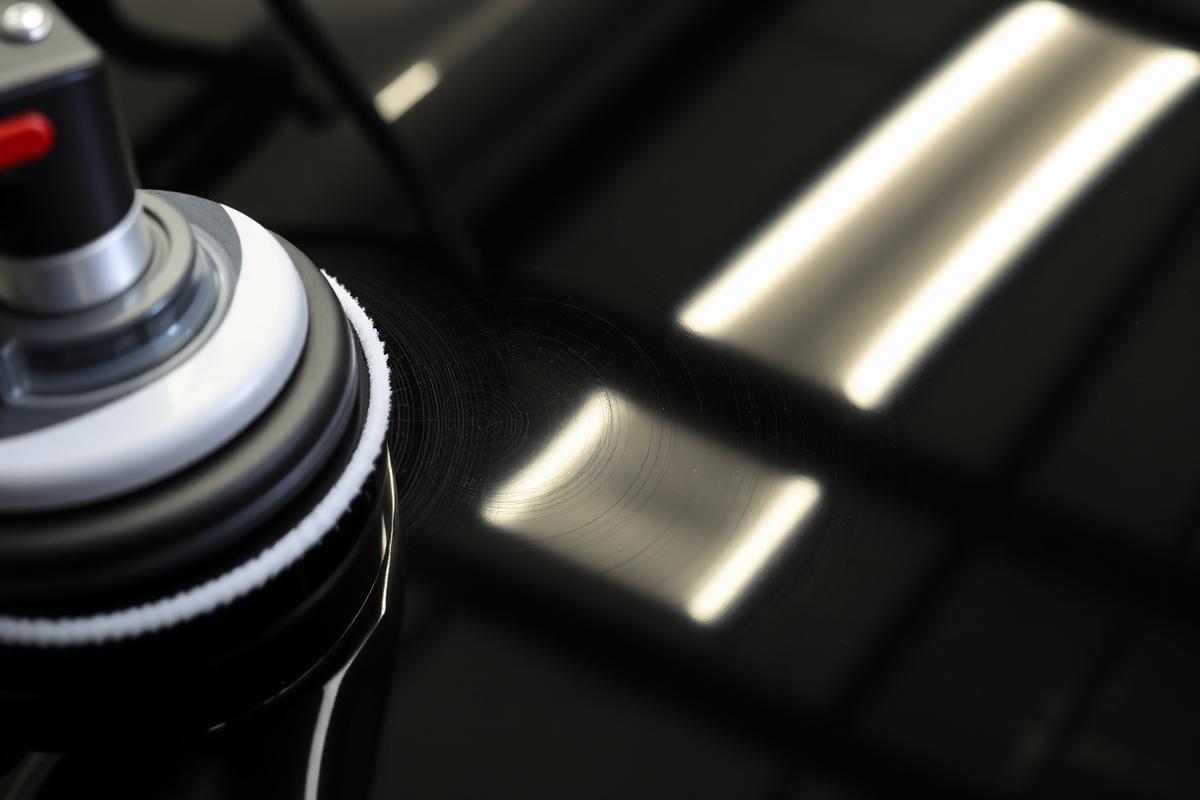
Remaining bonded deposits are addressed with the least aggressive polishing step that works, preserving clear coat thickness.
- 04
Protect
Because bare, freshly polished paint spots more easily than protected paint, the treated area is sealed to slow the problem returning.
Glass
Water spots on windows are their own job
Glass often shows water spotting worse than paint, and it is treated differently. Glass is harder and tolerates more aggressive mineral removers, but severe long-term etching in glass can be permanent — the windshield of a car that spent two years parked beside a sprinkler head sometimes never fully clears.
Spotted glass matters more than owners expect. Mineral deposits scatter oncoming headlights at night and make wipers chatter across the surface. Treating the glass usually produces the single most noticeable improvement in visibility, and where deposits refuse to clear entirely we say so rather than polishing a windshield until it distorts.
FAQ
Common questions
Can all water spots be removed?
Surface and most bonded deposits, yes. True etching is a depression in the clear coat and needs polishing to level the surrounding surface, which works if the etch is shallow. Deep etching on thin or already-corrected paint may only improve, and we assess before quoting rather than promising a full clear.
My car sits next to a sprinkler. What can I do?
Move it if you can, even a few feet, since sprinkler overspray is the leading cause of severe spotting here. If it cannot move, rinse it before the deposits bake on and keep protection on the paint. A sealant or coating will not stop spotting entirely but it makes removal far easier.
Will a coating prevent water spots?
It reduces them and makes them much easier to remove, but it is not immunity. Minerals can still etch a coating's surface if left to bake. The advantage is that the coating takes the damage instead of the clear coat, and a coating can be maintained or refreshed. Bare paint cannot.
Is vinegar safe for water spots?
It is mildly acidic and can work on light deposits, and it is also easy to leave on too long or use in the sun, which can dull the finish. Dedicated mineral removers are formulated to work fast and rinse clean. If you do try vinegar, work in the shade and rinse thoroughly.
How long does water spot removal take?
Surface deposits across a whole vehicle can be an hour or two. Bonded spots requiring polishing take longer and depend on how many panels are affected. A vehicle needing full-panel correction because of severe etching is effectively a paint correction job and gets quoted as one.
Ready to book mobile detailing?
Tell us the vehicle, its current condition and where it will be parked, and we can put together a quote and a time that works.