Cause
Swirls come from touching the paint badly
Every swirl mark is a scratch, and every scratch was made by something dragging grit across the clear coat. Automatic tunnel washes are the biggest single source, because the same brushes or cloth strips contact every vehicle that comes through and carry the previous customer's road grit with them. Next is home washing with a single bucket, where the mitt goes back into dirty water and returns loaded with the sand it just removed.
Then there are the smaller contributors that add up: drying with a bath towel, wiping dust off a dry car with a shop rag, using a dirty leaf blower nozzle against the paint, or the classic — the 'waterless wash' spray on a genuinely dirty vehicle. The circular pattern comes from the circular motion people naturally use. Straight-line washing produces straight scratches, which are less visually obvious but no less real.
Why they matter
Swirls are why dark paint looks flat
Gloss is a function of how uniformly a surface reflects light. Clear coat that is perfectly flat reflects a sharp image. Clear coat covered in thousands of tiny scratches scatters that light in every direction, which reads to the eye as haze, flatness or a milky look under the sun. This is why a black car can be spotlessly clean and still look tired.
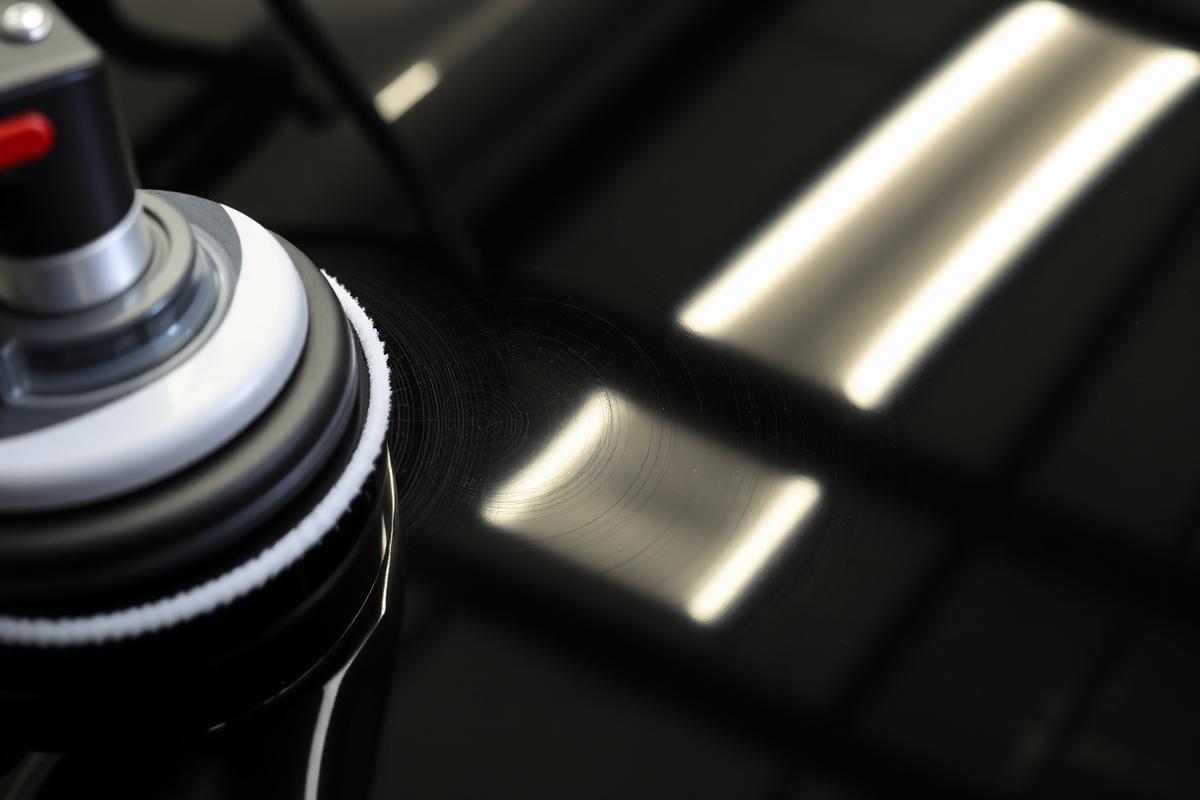
Correcting it does not add anything to the paint. Machine polishing removes a very small amount of clear coat to bring the surface level with the base of the scratches, restoring a flat, uniform surface. The result is the depth and reflection the paint had when it was new, which on a dark vehicle is a dramatic enough change that people struggle to believe it is the same car.
The process
How correction is carried out
- 01
Decontaminate
Wash, iron removal and clay come first. Polishing over embedded contamination drags it across the panel and adds new defects.
- 02
Inspect and test
Defects are assessed under focused lighting and a test section establishes the least aggressive pad and polish combination that clears them.
- 03
Machine polish
Panel by panel with a dual action machine, working methodically and checking results as we go rather than assuming a uniform result.
- 04
Refine and protect
A finishing pass removes any polishing haze, then a sealant or coating protects the freshly corrected, bare clear coat.
Keeping them away
Correction lasts as long as your wash habits allow
- Stop using automatic tunnel washes with brushes or cloth strips
- Wash with two buckets and grit guards, or have it done that way
- Use plush microfiber for drying, never a bath towel or chamois on a dusty car
- Never wipe a dry, dusty vehicle — rinse first, always
- Rinse wash media constantly and replace it once it looks tired
- Keep a coating or sealant on the paint so grit has less to grab
- Wash top down and do the filthy lower panels last with separate media
FAQ
Common questions
Will the swirls come back?
Not the ones we removed — they are physically gone. New ones appear if the wash habits that created them continue. This is why correction and a conversation about washing go together, and why a maintenance schedule or a coating is a sensible follow-up to protect the work.
Can all swirls be removed in one stage?
Light marring often clears with a single polishing stage. Heavier swirling needs a compounding step followed by a refining step. We test a section first and quote accordingly rather than guessing, because the difference in time between one stage and two is substantial.
Is it safe on my car's paint?
On healthy paint with normal clear coat thickness, yes. Dual action machines are far more forgiving than rotary polishers, and the approach starts mild and escalates only as needed. Vehicles with thin, previously corrected or repainted panels get a more conservative treatment, and we will say so.
My car is white. Do I even need this?
White and silver hide swirls extremely well, which is why owners rarely notice them. The paint is still scratched and the gloss is still reduced — it just does not announce itself. Correction on light colors gives a subtler but real improvement, especially in how the paint reflects rather than how it looks up close.
How long does it take?
A single-stage polish on a sedan is typically most of a day. Two-stage correction on a large SUV or truck can run into a second day. It is slow, methodical work, and any quote that promises a full correction in two hours is describing a filler product rather than a correction.
Ready to book mobile detailing?
Tell us the vehicle, its current condition and where it will be parked, and we can put together a quote and a time that works.