Working vehicles
Trucks get dirty in a different way
A pickup used for work in North Texas collects things a commuter car never encounters. Caliche and red clay from job sites in the Alliance corridor pack into wheel wells and dry like concrete. Trailer hitches and tailgates carry grease. The bed accumulates spilled fluids, concrete dust, mulch and whatever the last load left behind. Lower rocker panels and mud flaps take gravel road spray that etches through wax within weeks.
The interior follows the same pattern. Work boots put clay into carpet daily. The driver's door card, steering wheel and shifter get handled with dirty hands. The center console holds tools, receipts, sunflower seed shells and a decade of coffee. It is not delicate work, but it does need the right method — heavy soil requires more aggressive prep and, in the interior, real extraction rather than a wipe.
Bed and undercarriage
The areas nobody else touches
- Bed floor, walls and bulkhead, cleaned rather than rinsed
- Spray-in liner scrubbed, which is where most trucks look worst
- Drop-in liner areas and the debris trapped beneath, where possible
- Tailgate, latch mechanism, hinges and the seal surfaces
- Hitch receiver, bumper step and the grime around the wiring plug
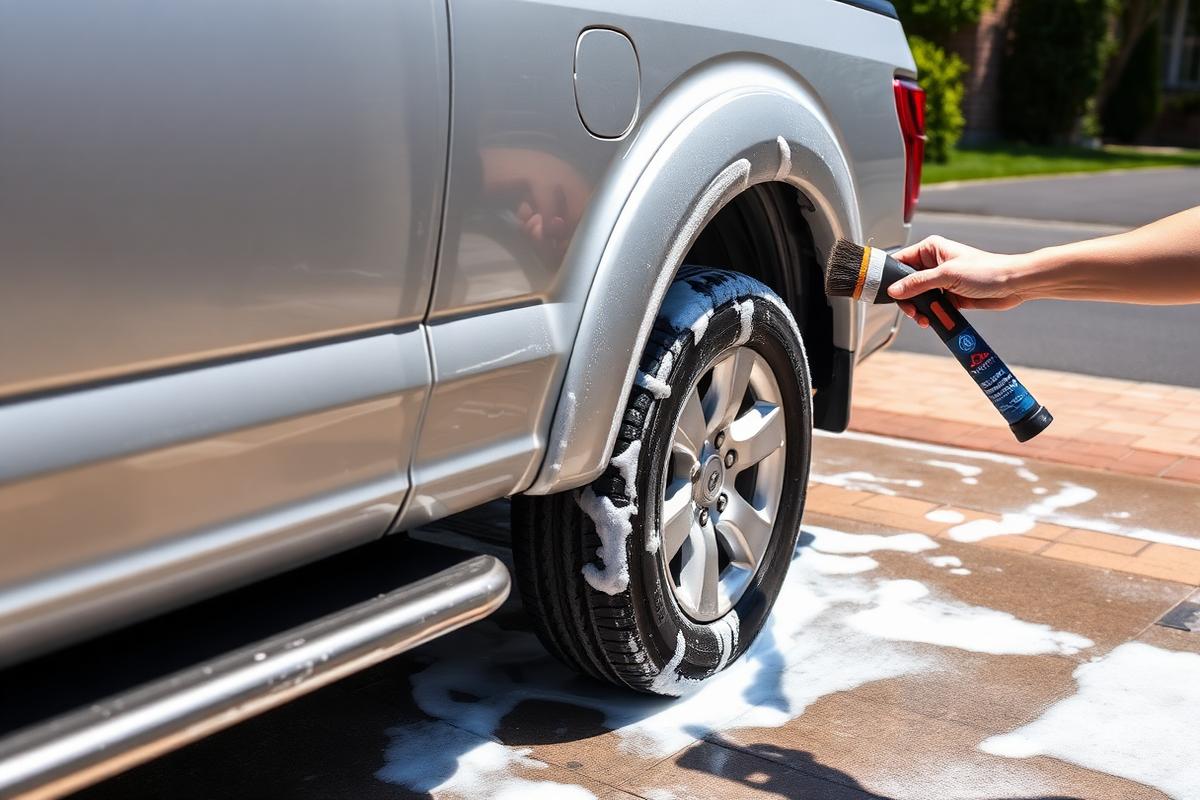
- Wheel wells, mud flaps and rocker panels packed with dried clay
- Running boards and step bars, which take mud and boot wear
- Fifth wheel and gooseneck areas on trucks set up for towing
Paint
Big panels and a very sunny climate
A crew cab has an enormous amount of painted surface, and the horizontal panels — hood, roof and bed rails — take the full weight of Texas sun. Oxidation on truck roofs is extremely common here, largely because nobody sees the roof of a lifted truck without deliberately looking. Bed rail caps and tailgate tops fade the same way.
The black plastic on trucks is the other giveaway. Wheel arch flares, bumper trim, mirror caps and running boards all fade to grey and chalk within a few years of outdoor parking. Cleaning and treating that trim often changes the look of a truck more than polishing the paint does, and a dedicated trim coating lasts far longer than a dressing that washes off in the next storm.
Who books it
Trucks we work on regularly
Daily driven pickups
Trucks used as family vehicles that happen to have a bed. Usually a straightforward full detail with attention to the lower panels.
Job site trucks
Contractors and trades. The priority is usually a functional reset of the interior plus bed and lower body cleaning.
Towing rigs
Hitch areas, bed rails and rear panels take specific abuse from trailer use and need dedicated attention.
Show and lifted trucks
Correction, coating and detailed wheel work. These get the same care as any enthusiast vehicle.
Trade-in preparation
Bed cleaning and interior extraction change how a truck is valued more than almost any other single thing.
Small business fleets
Multiple trucks on a schedule, handled at the yard or at each driver's home.
FAQ
Common questions
Do you clean spray-in bed liners?
Yes, and it makes a bigger difference than owners expect. A textured liner holds dirt in every ridge and needs proper agitation rather than a rinse. It will not return to factory black if it has years of UV fade, but the improvement in cleanliness is substantial and the difference is visible immediately.
Can you get dried concrete or caliche off?
Usually, with the right approach and patience. Fresh material comes off readily. Cured concrete splatter is a harder problem and there is a real risk of damaging the finish underneath if it is forced. We will assess it and be honest about what can come off safely.
Does a lifted truck cost more?
Sometimes, because reaching the roof and upper panels of a lifted vehicle takes more setup and more time. It is not a penalty so much as an accurate reflection of the work involved. Mention the setup when you request a quote so the estimate is right the first time.
How long does a truck detail take?
A full detail on a crew cab typically runs most of a day, more if the bed and undercarriage areas are heavily loaded. There is simply more vehicle. Maintenance visits on a truck already in good condition are much faster.
Can you come to a job site?
Often, if there is a safe, legal place to park and work and the site allows it. Many contractors prefer their trucks done at home over the weekend or at the yard. We will work out whatever is practical when you call.
Ready to book mobile detailing?
Tell us the vehicle, its current condition and where it will be parked, and we can put together a quote and a time that works.